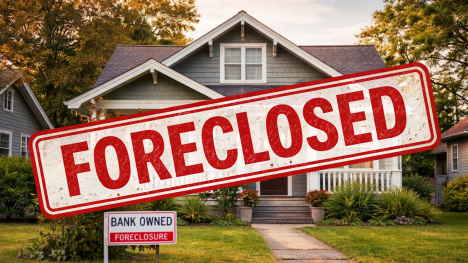
I have sold through two booms and a couple of genuinely ugly corrections in Northern California. Whenever foreclosures return to the conversation, the cause is always the same: buyers are worn down, prices feel disconnected from wages, and people start looking in the places everyone else avoids.
Distressed property carries a reputation, and part of it is deserved. The rest is secondhand anxiety repeated by people who have never actually taken one to closing. I have put clients into bank-owned homes, pre-foreclosures and short sales, and I have also told plenty of clients to put the pen down and walk. Both were the right call at the time.
So here is the answer with nothing added for effect: is a foreclosed home worth buying? Yes - provided the price accounts for the condition and you know what you are taking on.
What Buyers Picture, and Why It Is Wrong
The common image is a bargain nobody else noticed. A tired little house, dust on the floors, a bank desperate to be rid of it, and a buyer walking in with a lowball offer and out with instant equity.
That picture is roughly two decades stale.
What you are actually dealing with today:
- An asset the lender wants converted to cash and off the balance sheet
- Pricing generally near market, not at a fire-sale discount
- An as-is sale with minimal disclosure about the property's history
- An asset manager operating under fixed internal rules
That does not make them bad purchases. It makes them procedural purchases rather than negotiations between people.
The Horror Stories, and Which Ones Are True
I have heard all of them. Several are accurate.
"The place was destroyed."
It happens. People removed from a home against their will do not always leave it in good shape. I have walked properties stripped of appliances, with wiring cut out of the walls, water damage left to spread, and landscaping that had been dead for a year.
What buyers miss is the other half: most foreclosures are not wrecked. Plenty were rentals in ordinary condition. Plenty sat empty and untouched. Plenty belonged to people who simply ran out of money and left with the house intact.
Budget as though there is damage. Do not assume catastrophe before you have looked.
"The bank refused to repair anything."
Accurate, and it will not change.
Lenders do not make repairs, do not respond to appeals, and do not negotiate the way an owner does. They are managing a number on a report.
Walk in expecting concessions and you will be frustrated the entire way. Build the repair cost into your offer at the start and the process works fine.
"It dragged on for months."
Sometimes true.
These transactions run on the institution's clock. Asset managers carry large portfolios, documents sit in queues, and approvals that should take a day take a week. There is no one to call and hurry along.
This is not the purchase to make if you have given notice on your rental for the end of the month.
But slow is not the same as risky. Slow is just friction, and friction can be planned around.
Why Experienced Buyers Keep Coming Back to Them
The pricing has no ego in it
Banks price from data. They have no memories attached to the kitchen and no opinion about what the property "should" be worth. When something sits unsold, the price comes down on a schedule rather than after an argument.
I have had clients buy below comparable sales purely because the institution wanted the asset resolved before the end of a quarter. That is real, exploitable leverage, and it does not exist in a normal sale.
Nobody on the other side is upset
No divorce playing out through the contract. No siblings disagreeing about an inherited house. No seller who accepts your offer and then changes their mind after the inspection report lands.
You are transacting with an institution: impersonal, consistent, dull.
After thirty years, I will take dull over dramatic without hesitating.
Equity you can actually measure
Buy correctly - and everything depends on that phrase - and you can hold real equity the day the work is finished. Not projected equity, appraised equity.
One client of mine took on a bank-owned house that needed cosmetic work throughout and attention to the roof. They were anxious the entire escrow. Half a year later the appraisal came in comfortably above what they had spent buying and fixing it.
That outcome was not luck. It was arithmetic done before the offer, not after.
Where Buyers Actually Get Hurt
These purchases reward respect for the risk. Here is where the damage usually occurs.
Mistake one: skipping the inspection
Do not, under any circumstances.
When the bank tells you the inspection is informational only, that changes what the inspection is for - not whether you get one. You are not gathering evidence to negotiate. You are deciding whether to proceed at all.
I have ended foreclosure deals on the strength of an inspection report. Those were not failures. That is the system working.
Mistake two: guessing at repair costs
The most common and most expensive error. A low asking price makes people forget that:
- Deferred maintenance compounds rather than waits
- Nothing has been serviced in a long time, and the age of every system is unknown
- Empty houses deteriorate faster than occupied ones - plumbing, seals, pests, moisture
Get real bids from real contractors instead of estimating from a walkthrough. Then add a contingency, and then add to the contingency. If the numbers still work after all of that, you have found something.
Mistake three: title and occupancy problems
Distressed properties can arrive with complications: prior liens that should be cleared but need verifying, unpaid HOA balances that become yours, and occasionally someone still living in the house. This is exactly why these are not do-it-yourself purchases. You want thorough title work and someone who has seen these problems before and can spot them early.
Mistake four: falling for the deal instead of the house
Buyers get attached to the discount. They accept conditions they would refuse instantly in a conventional purchase, because the price feels like an opportunity slipping away.
Excitement is not analysis. If the numbers fail, leave. Another one will come along, and it always does.
Pre-Foreclosures and Short Sales Are Not the Same Thing
Plenty of distressed property has not reached bank ownership yet, and the differences matter.
Pre-foreclosure
The owner is behind on payments and still in the house. Some want a way out and will work with you. Some are exhausted. Some have not accepted the situation at all.
These can be excellent purchases, but they are fragile. They require patience, plain and respectful communication, and the understanding that nothing is settled until the lender signs off.
Short sales
Here the lender agrees to accept less than the outstanding balance. I have closed them successfully. I have also watched them dissolve after four months of waiting on a committee.
Worth pursuing when the discount is genuinely significant, you have no deadline, and you have made peace with the delays in advance. If uncertainty keeps you awake, this is not your market.
Do You Have to Pay Cash?
The most persistent myth in this category. No, you do not.
A large share of foreclosures finance conventionally, and many qualify for FHA or for renovation lending. The deciding factor is almost never the foreclosure status - it is the condition of the property.
If the house is habitable and clears basic lending requirements, ordinary financing generally works. If it is in poor shape, a renovation loan may be the route, though those carry more documentation and expect a stronger borrower profile.
Who Should Be Looking at These
Foreclosures suit buyers who:
- Are genuinely comfortable purchasing as-is
- Can absorb schedule uncertainty without it wrecking their plans
- Know how to budget repairs, or will hire someone who does
- Are optimizing for value rather than for move-in condition
- Can keep the arithmetic separate from the emotion
They are a poor fit for buyers who:
- Need to move on a fixed date into a finished house
- Cannot tolerate delays outside their control
- Have nothing left in reserve after the down payment
- Expect the seller to fix what the inspection finds
Neither list is a judgment. It is worth being honest with yourself about which one describes you before you start.
Are They Still Worth It in This Market?
Yes - with your eyes open.
A foreclosure is not an automatic discount. It is an opportunity that arrives attached to obligations. When the price properly reflects condition, risk, timeline and repair cost, these are among the strongest purchases I have seen clients make.
When buyers pursue them assuming a guaranteed bargain, they are the ones who get hurt.
The Short Version
A foreclosed home is not a shortcut to ownership. It is a different route with a different set of demands.
Buy one expecting a finished product and you will regret it. Buy one expecting work, waiting and planning, and you can finish well ahead of where a conventional purchase would have left you.
I have watched clients turn these into long-term homes, into rentals, and into the foundation of a portfolio. I have also shut deals down mid-escrow when the math stopped working.
So, is it worth buying a foreclosed home? It is - when the price is right, the risks are understood, and the buyer is being honest about what they are signing up for.
Do the homework and these properties still reward the buyers who think their way through them instead of reacting.