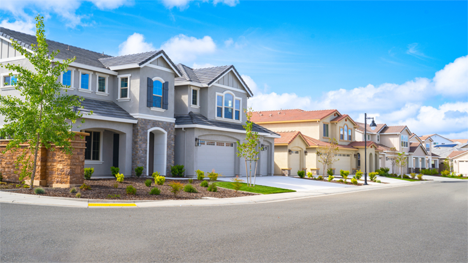
Ask any first-time buyer what kept them up at night and you will rarely hear "the kitchen layout." It is the map. Picking an area is the one decision that comes bundled with everything else you are buying: your neighbors, your morning routine, your weekends, and the value of the place a decade from now. Buyers who get this right tend to work through it in three passes, and none of those passes happen on a listing site.
1. Let the Numbers Draw the Map First
Before anyone falls in love with a front porch, the practical constraints deserve a turn. Sorting out what you can pay for and how far you can stand to drive eliminates most of the country in an afternoon and turns an impossible search into a short list.
- Your budget picks the zip codes: The single strongest force shaping any search is the price you can actually carry. Rather than fighting that, experienced buyers let it work for them - they identify the handful of communities where their number buys something decent and stop browsing the ones where it does not. Expectations get adjusted early, not after six months of disappointing tours.
- Drive the commute before you trust it: A mapping app on a Sunday afternoon will lie to you. Get in the car at 7:30 on a Tuesday and make the trip for real, both directions. A house that is fifteen minutes away in theory and fifty in practice will quietly take a week of your life every year, and no amount of square footage compensates for that.
2. Check the Records, Not the Reviews
Every area "feels" a certain way on a sunny Saturday. The parts that matter long after the sun goes down are the ones you can look up, and a couple of hours of research will tell you more than a dozen open houses.
- Safety and the resale question: Public crime mapping tools let you compare block-level patterns instead of relying on reputation. While you are at it, look at how the area holds value. Communities zoned to well-regarded school districts tend to stay in demand and recover faster when the market cools - which matters to your equity whether or not you have children.
- How far is everything, really: Map the ordinary stuff: the on-ramp to the highway, the nearest transit stop, the closest emergency room, and the grocery store you would use on a weeknight. Errands you repeat two hundred times a year should not be road trips.
- The line items you did not budget for: Pull a sample homeowners insurance quote for the specific address, not the metro area. Flood zoning, wildfire exposure, roof age norms and local claim history can swing that premium by hundreds of dollars a year between two neighborhoods a few miles apart.
3. Stand on the Sidewalk, Repeatedly
Spreadsheets narrow the field; your own eyes make the call. The character of a street is not something a listing photo is capable of showing you, and one scheduled showing is not enough time to find it.
- Go back at a different hour: Visit once on a weekday morning to see the traffic and the rhythm of people leaving for work, then again on a Friday or Saturday night to hear what the street actually sounds like and to see whether there is anywhere left to park.
- Get out of the car: Driving through tells you almost nothing. Walk a few blocks in each direction and pay attention to the details that reveal how invested people are in the place:
- Are yards, fences and paint jobs generally kept up, or is upkeep hit and miss?
- Do you see signs of life - kids outside, dogs being walked, neighbors talking over a fence?
- Would you be comfortable walking this route alone after dark?
- Everything else is renovatable: This is the part buyers underestimate. Cabinets, flooring, layout, even an addition - all of it can change. The street itself cannot. You are inheriting the traffic, the noise, the neighbors and the atmosphere exactly as they are, so weight them accordingly.
Work the sequence in that order - affordability first, verifiable data second, your own two feet last - and the final choice stops feeling like a gamble. You will not have found a perfect neighborhood, because there is not one. You will have found the one whose trade-offs you are genuinely willing to live with, which is the only version of this decision that holds up over ten years.